
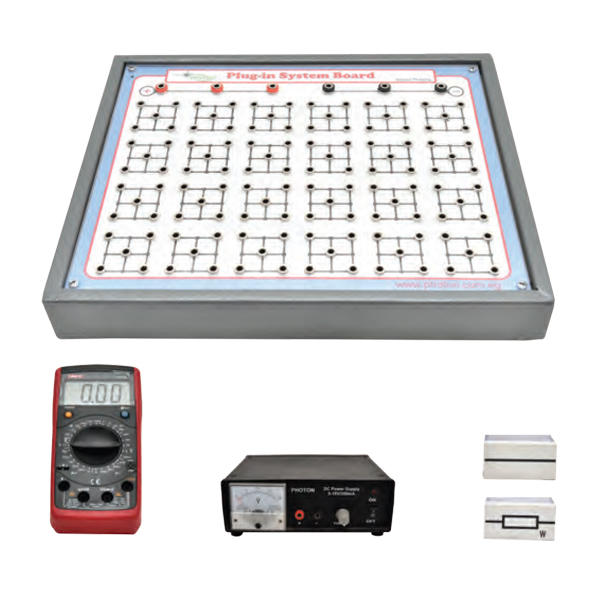
Ohm’s Law, Resistance in Series and Parallel Circuits
Ohm’s Law states that the current through a conductor is directly proportional to the voltage across it and inversely proportional to the resistance.
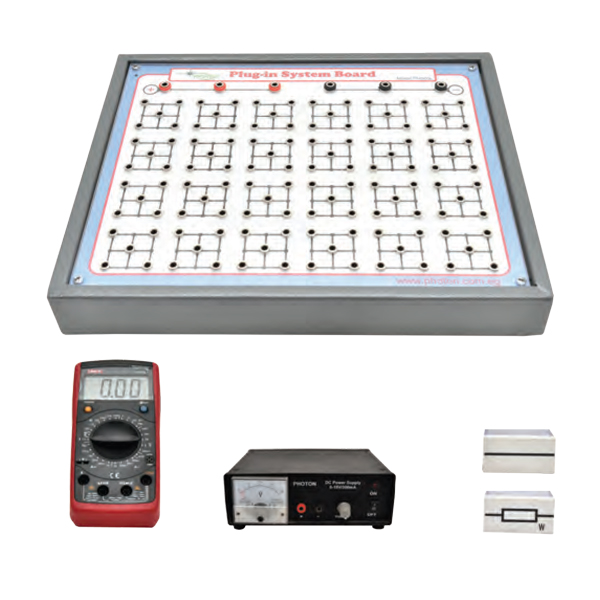
Kirchhoff’s Current and Voltage Laws
This law states that the total current entering a junction (or node) in an electrical circuit is equal to the total current leaving the junction. This follows the principle of conservation of charge.
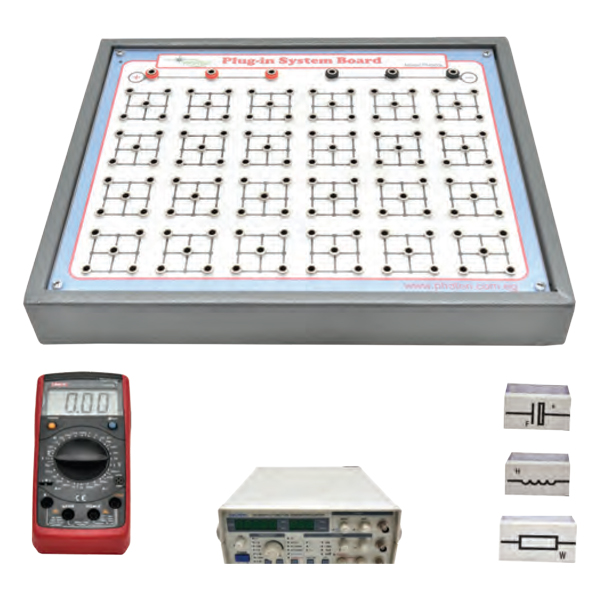
RLC Circuits
An RLC circuit consists of a resistor (R), an inductor (L), and a capacitor (C), connected in series or parallel. The circuit's impedance depends on the frequency and the values of R, L, and C.
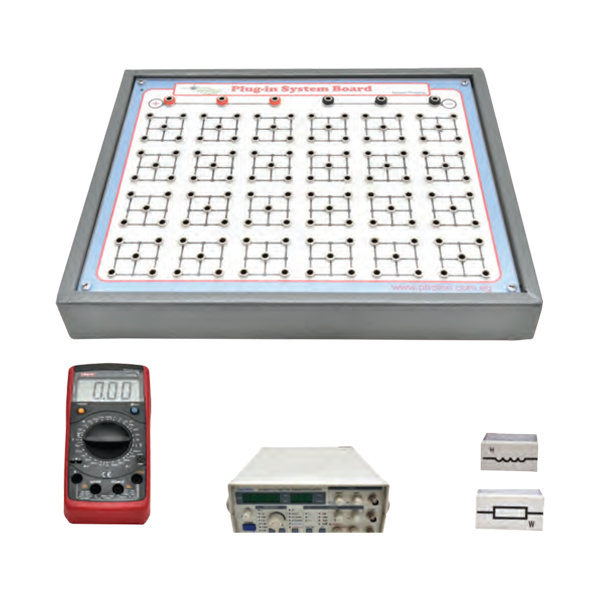
RL Circuit
An RL circuit consists of a resistor (R) and an inductor (L) connected in series or parallel.
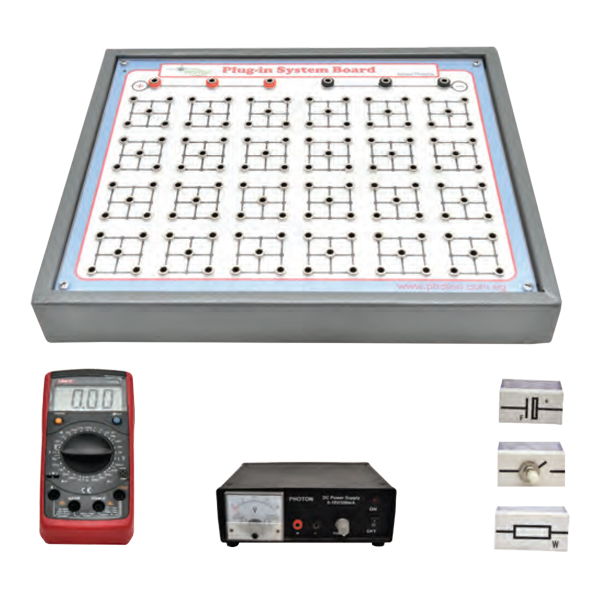
RC Circuit
An RC circuit consists of a resistor (R) and a capacitor (C) connected in series or parallel.
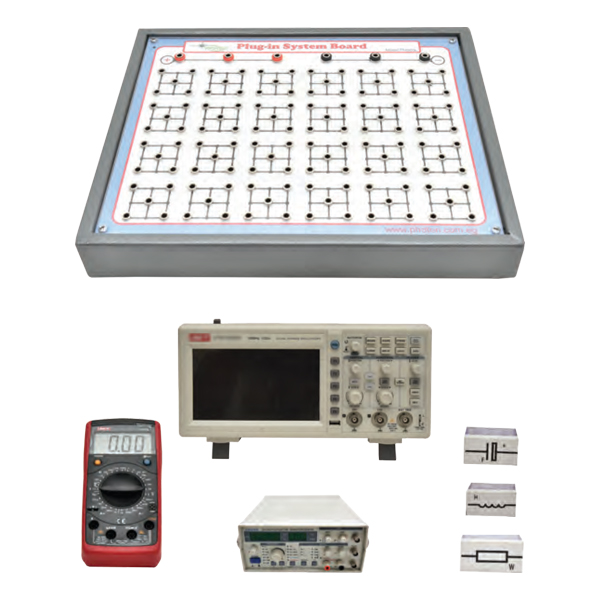
RLC Series and Parallel Circuits with Variable Frequency
In RLC circuits, the impedance and behavior change with varying frequency of the applied AC voltage.
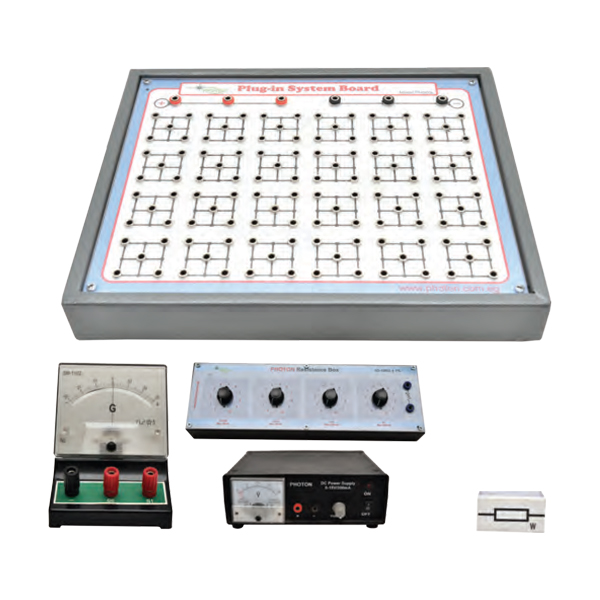
Wheatstone Bridge
Studies how quarter-wave plates convert linearly polarized light into circularly polarized light.
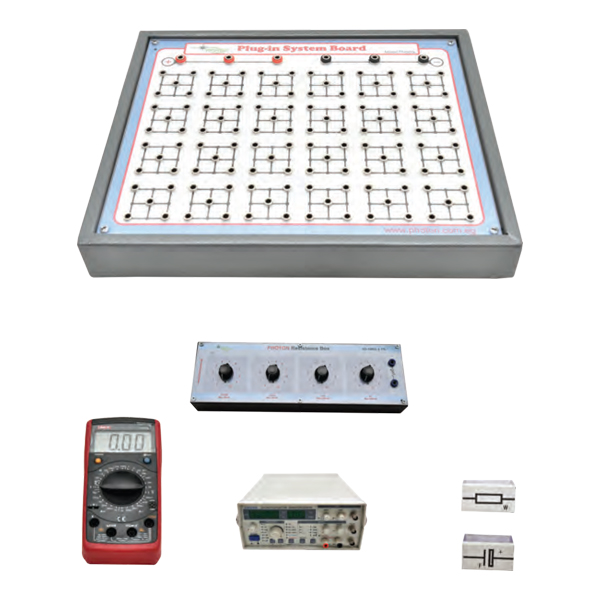
Wien Bridge
The Wien Bridge is a type of electronic circuit used to measure frequency, and it is most commonly used for generating sine waves.
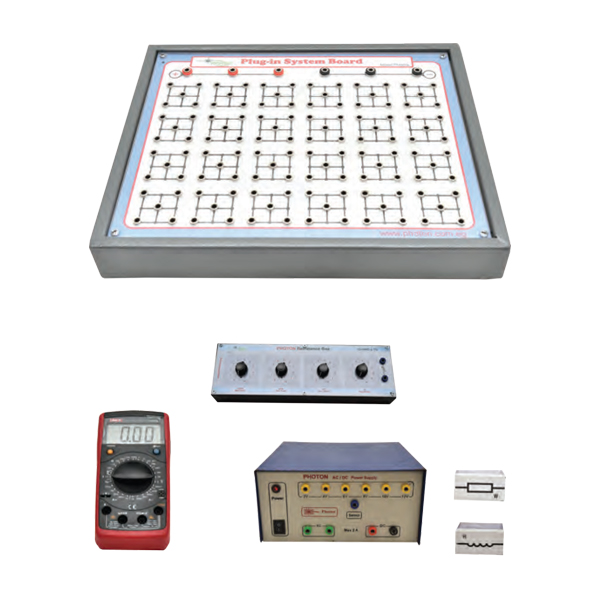
Maxwell Bridge
The Maxwell Bridge is used to measure the self-inductance of a coil.
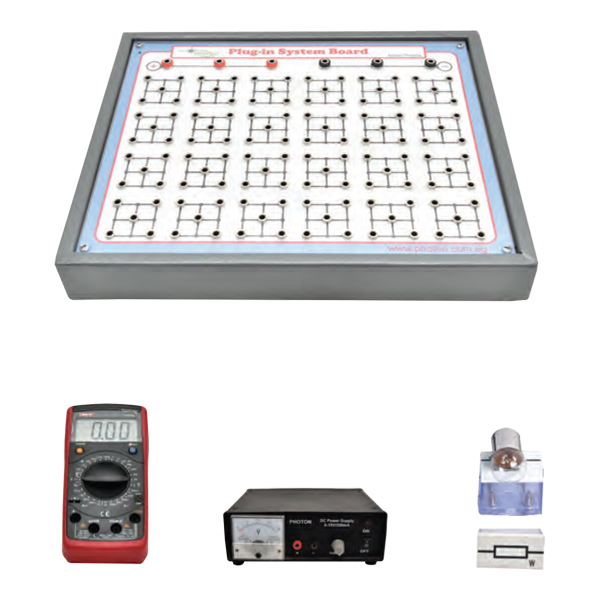
Recording the Current-Voltage Characteristics of an Incandescent Lamp
Record the current voltage characteristic of an incandescent lamp.
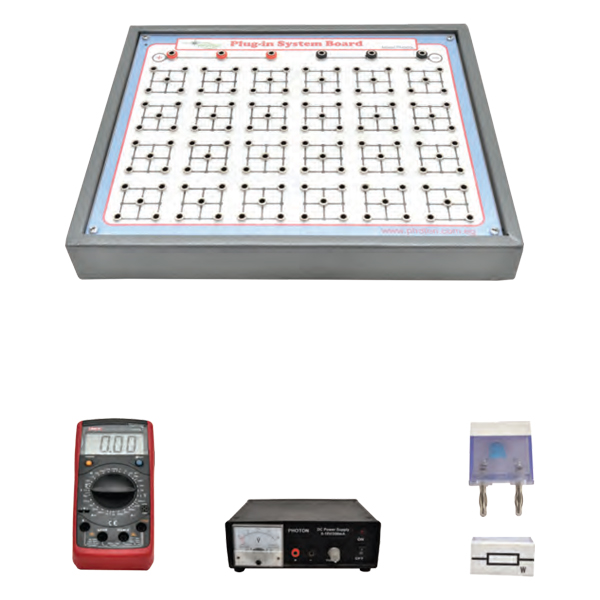
Recording the Current-Voltage Characteristics of a Varistor
A varistor is a resistor with a nonlinear current-voltage (I-V) relationship, often made from metal oxide materials.
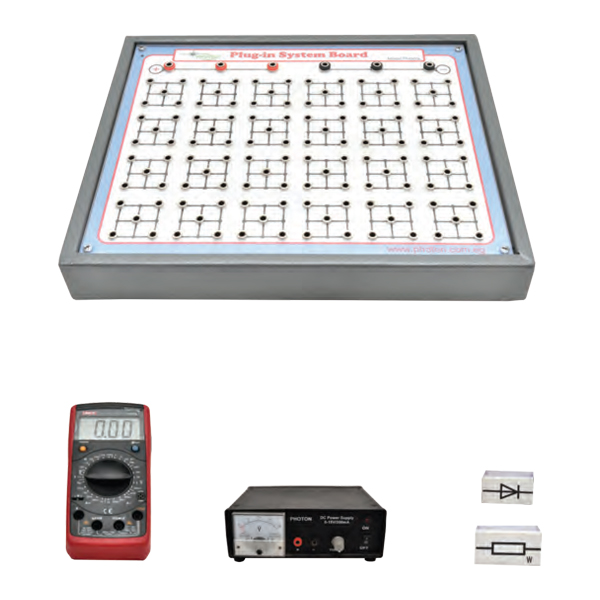
Recording the Current-Voltage Characteristics of Silicon (Si) Diodes
A silicon (Si) diode is a semiconductor device that allows current to flow in one direction and blocks it in the opposite direction.
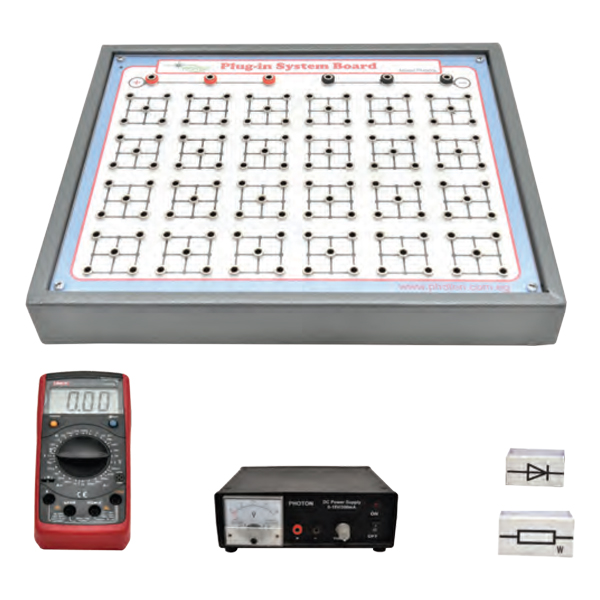
Recording the Current-Voltage Characteristics of Germanium (Ge) Diodes
A germanium (Ge) diode behaves similarly to a silicon diode but has some differences due to its material properties.
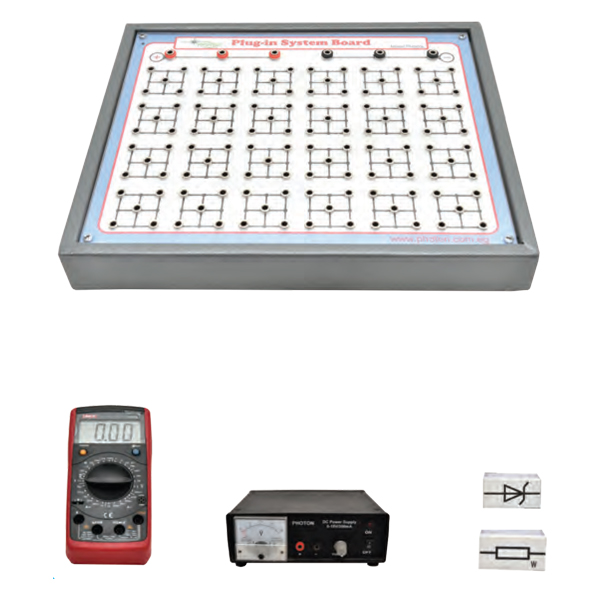
Recording the Current-Voltage Characteristics of a Zener Diode
A Zener diode allows current to flow in reverse once the Zener voltage is reached, unlike regular diodes.
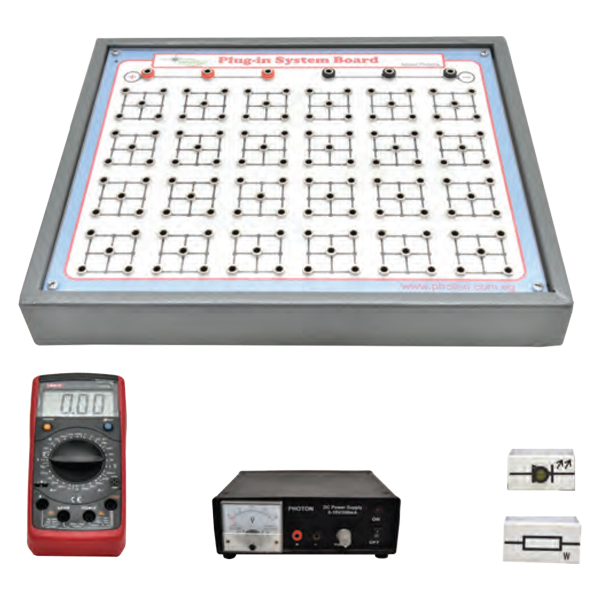
Recording the Current-Voltage Characteristics of Light Emitting Diodes (LEDs)
In forward bias, LEDs emit light once a threshold voltage (typically between 1.8V and 3.3V) is reached.
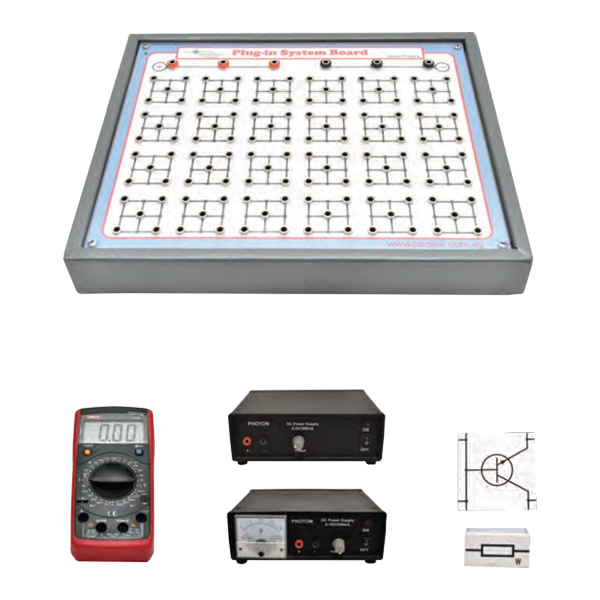
Recording the Characteristics of an NPN Transistor
This experiment is crucial for understanding how NPN transistors work in amplification, switching, and biasing.

Recording the Characteristics of a Field-Effect Transistor (FET)
In a Field-Effect Transistor (FET), the drain current (ID) is controlled by the gate-source voltage (VGS) and the drain-source voltage (VDS).
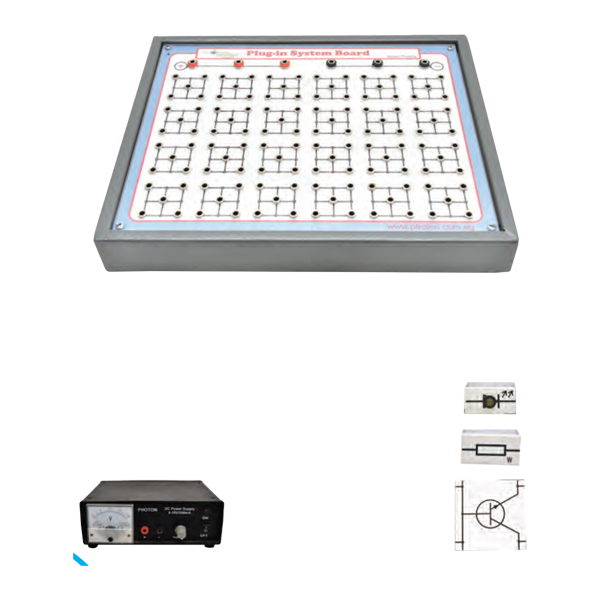
Transistor as a Switch
Transistors as switches are essential in digital circuits, logic gates, and power control applications.
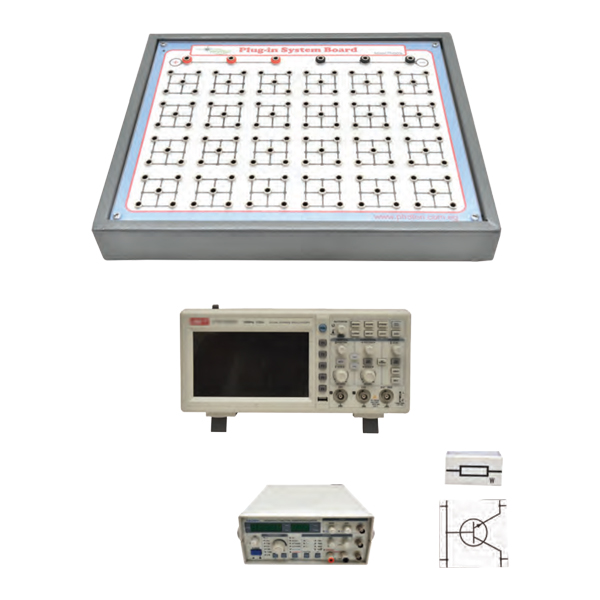
Transistor as an Amplifier
A transistor amplifies a weak signal by operating in its active region
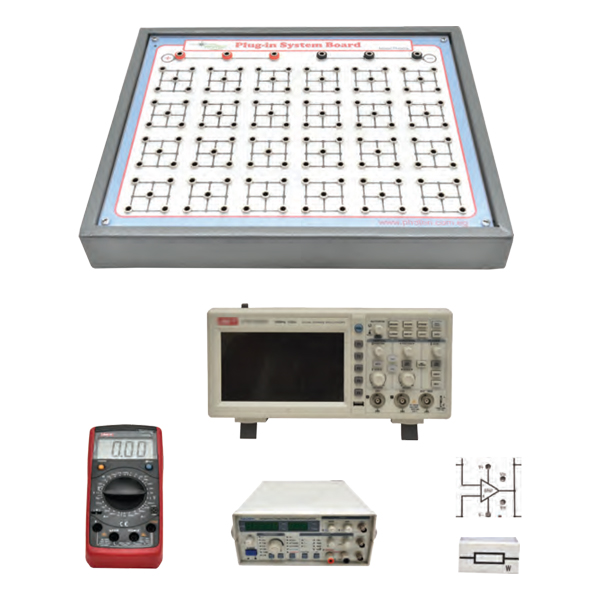
Recording the Characteristics of Operational Amplifier (Op-Amp) Circuits
Op-Amps are versatile components used for amplification, filtering, and mathematical operations.